Rock Hill outdoor drainage resource

French Drain Installation Help in Rock Hill, SC

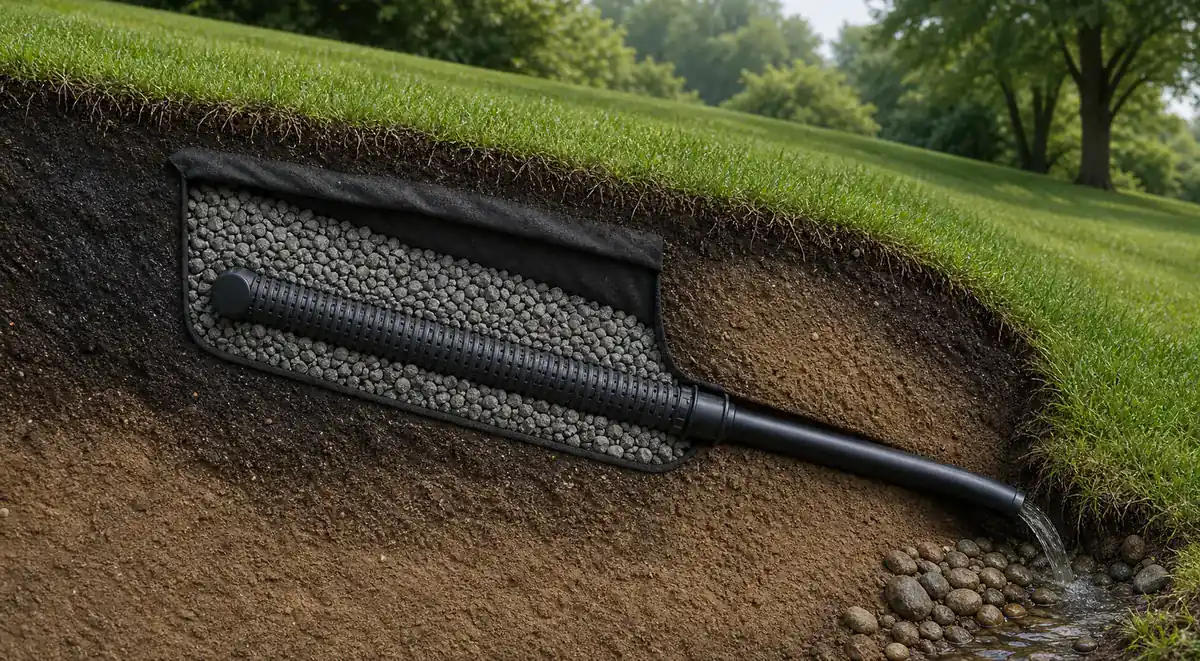
A French drain can intercept subsurface water moving through a soggy lawn or persistent low area, but it needs a workable outlet and a route matched to the yard.

Rock Hill Yard Drainage Help is an independent lead-generation website. We do not perform contractor services directly. Requests may be shared with a local outdoor drainage or landscape drainage provider for follow-up.

What kind of problem can a French drain solve?

French drains are most useful when water moves through saturated soil rather than arriving only from one roof outlet. They may help beside wet lawn corridors, uphill runoff paths, and hardscape edges.

Compare the right outdoor drainage options

A catch basin collects surface flow at a low point. A downspout extension carries roof water. A swale guides broad sheet flow. Grading changes the surface slope. A site review should identify the source before selecting a pipe.

  • Water source and direction
  • Safe discharge route
  • Soil condition and slope
  • Utilities, access, and surface restoration

What helps with a useful estimate?

Share photos during and after rain, mark the wettest areas, and explain how long water remains. An installer should review length, depth, access, outlet, and restoration needs before quoting.

When a French drain is a reasonable candidate

A French drain is worth comparing when the wet area follows a repeatable corridor through the soil, remains soft after surface water has moved away, or receives seepage from an uphill section of the lot. It needs enough fall or another workable discharge design. A trench with nowhere dependable to release water can become an expensive gravel-filled low spot.

When another drainage method may fit better

Water appearing immediately below a gutter usually calls for roof-runoff routing first. A distinct surface pool may be easier to collect with a basin. Wide, shallow flow across a lawn often points toward a swale or grading correction. Matching the method to the source keeps a French drain from being asked to collect water it cannot intercept efficiently.

Outlet, excavation, and restoration planning

The estimate should identify the proposed outlet, trench route, pipe and aggregate approach, access for excavated soil, and the surfaces that must be restored. The person performing excavation should contact SC811 before digging and should also account for private lines that standard utility marking may not cover, including irrigation, lighting, or privately installed utilities.

  • Confirm where collected water can leave responsibly
  • Protect marked utilities and identify private lines
  • Plan for gates, trees, paving, irrigation, and spoil removal
  • Define sod, seed, planting, or hardscape restoration

Maintenance and common failure points

A useful design keeps inlets, cleanouts, and outlets available for inspection. Sediment entering from an uncovered basin, crushed pipe, inadequate slope, and a buried or eroded outlet can reduce performance. Ask how the system can be checked after storms and which parts require periodic clearing.

Frequently asked questions

Does every soggy yard need a French drain?

No. Roof runoff may need a downspout solution, while broad pooling may respond better to a catch basin, swale, or grading correction.

Where should a French drain discharge?

The outlet must be lawful, stable, and able to accept flow without shifting the problem to a neighbor, street, or eroding area.

Local review only: this form logs a preview in your browser console. It does not transmit or save your information, contact a provider, or promise follow-up.

Describe your yard drainage problem