What should I do when water is near electrical equipment?
Stay clear. Never operate switches or electrical equipment while standing in water. Use emergency services, the utility, or a qualified electrician according to the immediate hazard.
Rock Hill outdoor drainage resource
Water touching electrical equipment, outlets, cords, or panels creates a stay-clear condition. CDC guidance says never switch power or use electrical equipment while standing in water. Use emergency services or the responsible utility for immediate danger; this site cannot dispatch help.
Editorial review date: July 19, 2026. Pricing and guidance sources were checked for this review.
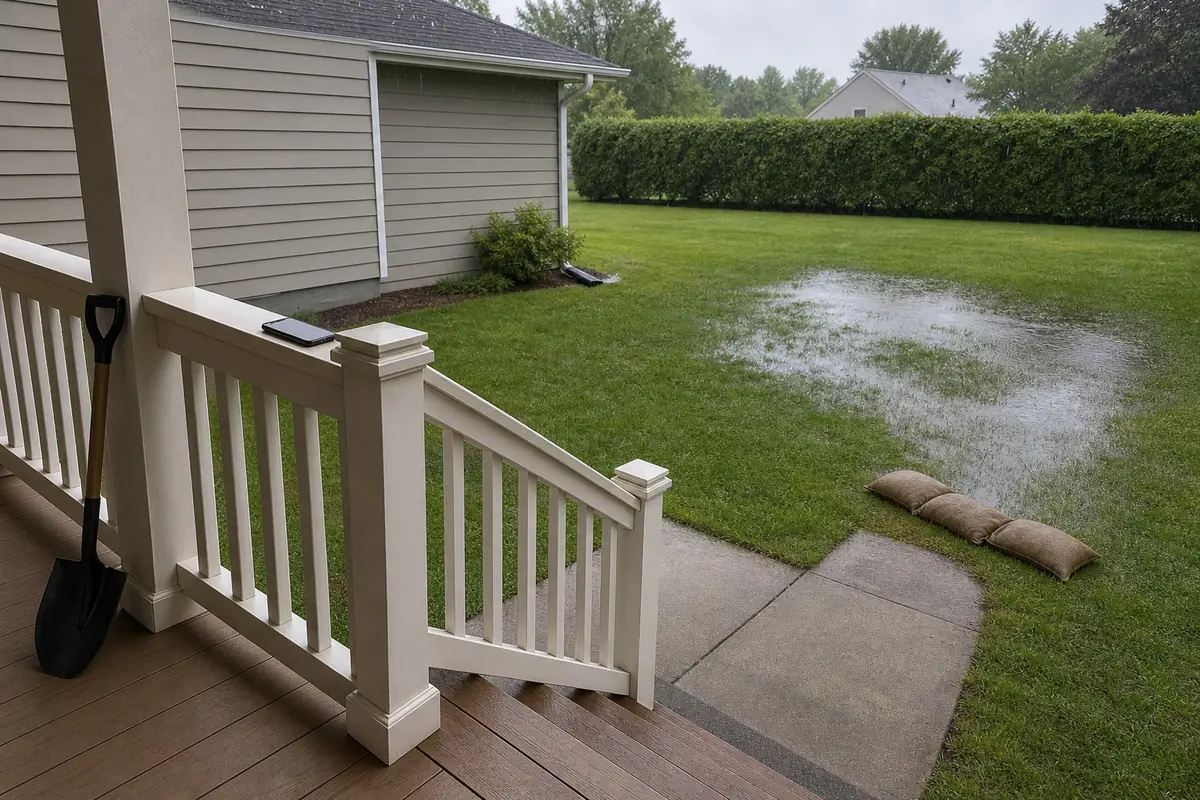
Keep people and pets away from water that may contain sewage, chemicals, sharp debris, or electrical current. CDC guidance says floodwater can carry dangerous bacteria and calls for protective equipment when sewage is involved. Do not enter the area to inspect a drain or reach a breaker through standing water.
Water actively entering the home has moved beyond an outdoor wet-yard question. Protect people first, use emergency services when life safety is threatened, and contact appropriate interior water-intrusion or building professionals. Do not rely on an outdoor drainage request while water is entering occupied space.
Active erosion beneath a walkway, retaining wall, steps, or foundation can remove support before the damage is obvious from above. Block access, keep weight and vehicles away, and seek prompt qualified review. Photograph only from stable ground.
Move people and pets away, block access to unstable or contaminated areas, and watch from dry cover. If it can be done without entering water or approaching electrical hazards, reconnect a fallen surface downspout extension or use a temporary barrier to guide clean surface runoff away from an opening. Stop if the action shifts water toward a neighbor, roadway, or unsafe area.
Photograph from stable ground, record when flow began, identify the visible source and direction, and note blocked access, erosion, utilities, sewage indicators, and water entering the building. Time-stamped observations help later review. They are never worth stepping into moving, unknown, or energized water.
A storm trench can collapse, expose an unmarked utility, create a new flow path, and draw a person into unsafe water. SC811 requires notice before excavation and standard marking does not cover every private line. Wait for safe conditions, identify utilities, and plan a stable outlet before digging.
A safe extension or temporary barrier may reduce exposure during one storm. Permanent work begins later with diagnosis, elevations, utilities, collection, conveyance, discharge, and restoration. The urgent appearance of water does not prove that a French drain, basin, swale, or grading change is the lasting answer.
Submitting this form is a request, not a booking. It does not guarantee an estimate, a response time, or provider availability. Calling the listed number is also a request and does not contact emergency services, a public authority, or a guaranteed dispatch channel. Use real emergency or utility contacts when the hazard cannot wait.
A blocked street inlet, public drainage structure, or right-of-way hazard may belong with the City of Rock Hill or another owner of the system. Describe the location and visible condition from a safe place. Do not remove covers, enter structures, or work in moving street runoff.
Stay clear. Never operate switches or electrical equipment while standing in water. Use emergency services, the utility, or a qualified electrician according to the immediate hazard.
Keep people and pets away. CDC guidance treats floodwater and sewage as contamination hazards requiring protective equipment and careful cleanup.
No. Active flow can hide utilities, destabilize soil, and redirect water unpredictably. Wait until conditions are safe and excavation requirements are addressed.
No. Submitting this form is a request, not a booking. It does not guarantee an estimate, a response time, or provider availability, and it does not contact emergency services.
From a safe place, record the source, flow direction, affected surfaces, erosion, blocked access, nearby utilities, and changes over time. Avoid entering the water for photos or measurements.
Request delivery: submitting sends your details through Web3Forms. The request may be shared with a local outdoor drainage provider for follow-up. Submission does not guarantee availability, response time, or a quote.
Prefer to call? Call (803) 471-6547.